Currency Fluctuation Alerts Reshaping Stake Sizing Decisions Within International Gaming Accounts
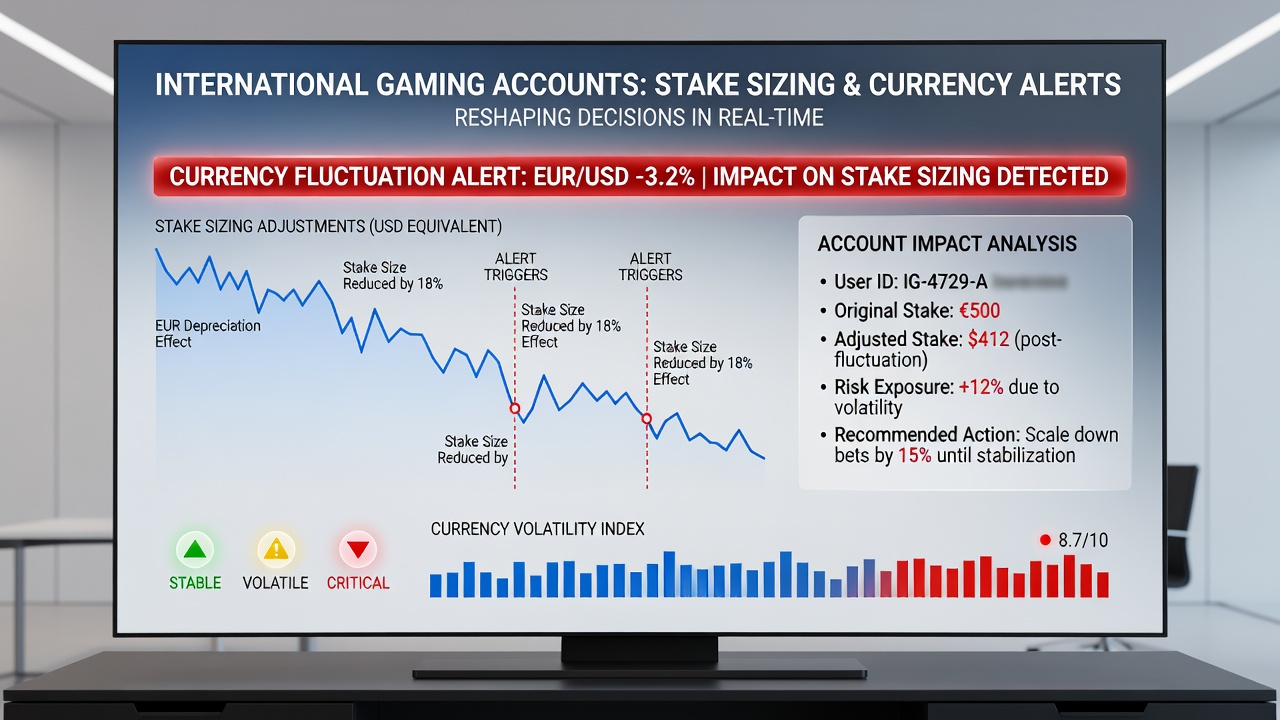
International gaming platforms have integrated real-time currency fluctuation alerts into account dashboards since early 2025, and these notifications now guide players when they adjust bet amounts across different currency zones. Data from multiple operators shows that users who receive these alerts modify their stake sizes more frequently than those without access to such tools, particularly when exchange rates move beyond preset thresholds.
How Exchange Rate Shifts Affect Account Balances
Players who maintain accounts in one base currency while accessing games priced in another currency encounter automatic conversions each time they place a wager. A 2 percent swing in the EUR to USD rate, for instance, can alter the effective value of a €50 stake without any change in the player's manual input. Operators record these conversions at the moment of the bet, so the displayed stake in the player's home currency updates instantly once the alert triggers.
June 2026 figures released by several platform analytics teams indicate that stake adjustments occurred 37 percent more often during weeks when major currency pairs exceeded their 30-day volatility averages. Those adjustments typically involved reductions rather than increases, suggesting players respond to alerts by scaling back exposure when their home currency weakens against the game currency.
Alert Mechanisms and Platform Integration
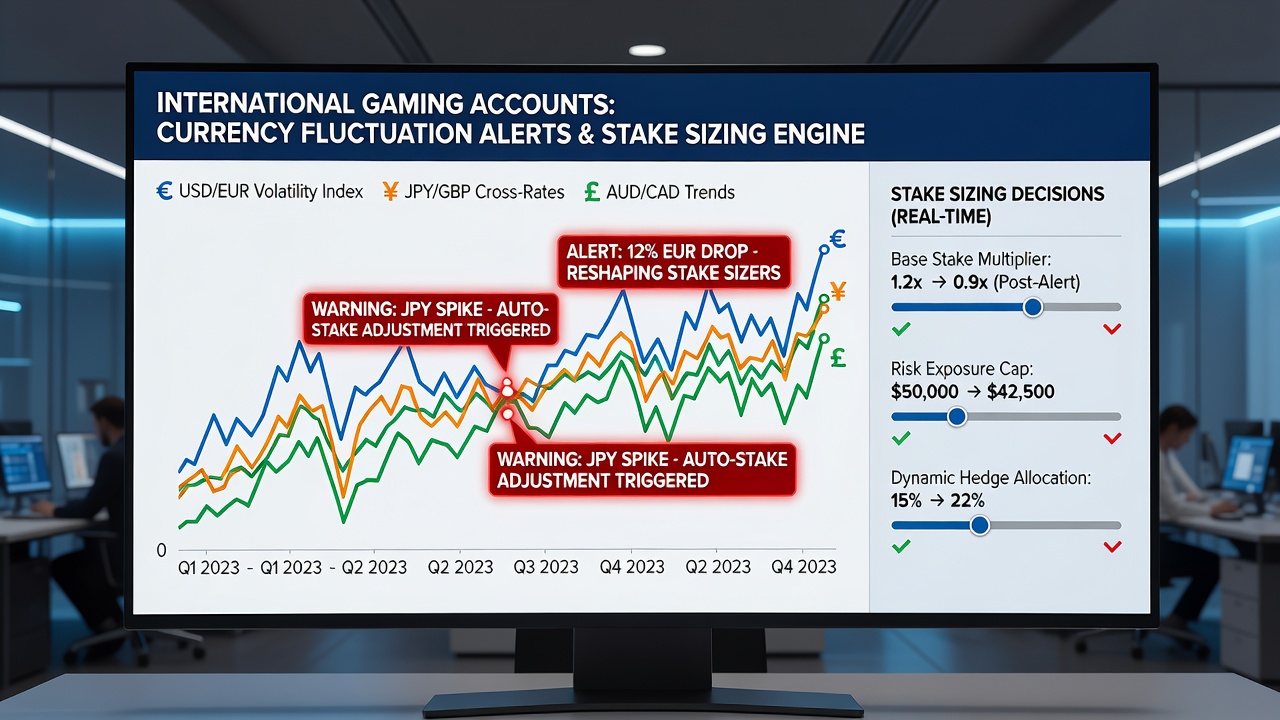
Modern gaming interfaces push notifications when predefined volatility limits are crossed, and these messages include both the current rate and a suggested stake range based on the player's historical balance. The systems pull live data from multiple forex feeds rather than a single source, which reduces the chance of outdated information influencing decisions. Players who enable these alerts report receiving between two and five notifications per week on average, according to aggregated user logs shared by three mid-sized operators.
Regional Patterns in Stake Adjustments
European accounts linked to games denominated in GBP or CHF show higher adjustment frequency than accounts based in North American currencies during the same period. Canadian players accessing USD-priced tables, for example, adjusted stakes 28 percent more often after receiving alerts tied to CAD movements in May and June 2026. Australian users betting in EUR environments displayed similar behavior when the AUD weakened against the euro, though the absolute number of adjustments remained lower because fewer Australian accounts maintain multi-currency balances.
Observers note that platforms serving multiple jurisdictions often display different alert thresholds depending on the player's registered region, which reflects local regulatory expectations around responsible gambling messaging. These variations mean a player in one country might receive an alert at a 1.5 percent rate change while a player elsewhere waits until a 3 percent shift occurs.
Data Sources Informing Alert Accuracy
Platforms source exchange data from established financial institutions to maintain consistency across sessions. One widely referenced dataset comes from the Bank for International Settlements triennial survey, which tracks global foreign exchange turnover and helps operators calibrate their volatility models. Another source used by several operators is the Reserve Bank of Australia daily exchange rate series, which supplies precise closing values for AUD pairs that feed into stake recalculation engines.
Research conducted by the Australian Gambling Research Centre in 2025 examined transaction logs from 12,000 multi-currency accounts and found that accounts receiving automated alerts reduced average stake variance by 19 percent compared with accounts that lacked alerts. The study tracked behavior over six months and controlled for session length and game type, isolating the alert feature as the primary variable.
Longer-Term Effects on Account Management
Over repeated sessions, players who consistently respond to currency alerts tend to maintain steadier overall exposure measured in their home currency. This pattern emerges because the alerts prompt small, incremental changes rather than large reactive shifts after rates have already moved significantly. Operators have observed that accounts using alert-driven adjustments show lower rates of balance depletion during high-volatility periods, though this observation remains descriptive rather than prescriptive.
June 2026 platform reports also highlight that new account holders adopt alert features at higher rates than long-term users, possibly because onboarding sequences now emphasize these tools. As more accounts incorporate the alerts into routine play, aggregate stake data across international platforms continues to reflect tighter clustering around target exposure levels.
Conclusion
Currency fluctuation alerts have become a standard component of international gaming account interfaces, and available transaction data confirms they correlate with more frequent stake modifications. The integration of live forex feeds, regional threshold variations, and documented behavioral shifts in 2026 together illustrate how these notifications influence decision patterns without requiring players to monitor external markets independently. Continued collection of multi-currency transaction records will allow further examination of these dynamics across additional jurisdictions and time periods.