Decoding Cross-Platform Data Flows That Link Mobile Session Timings to Table Game Payout Adjustments
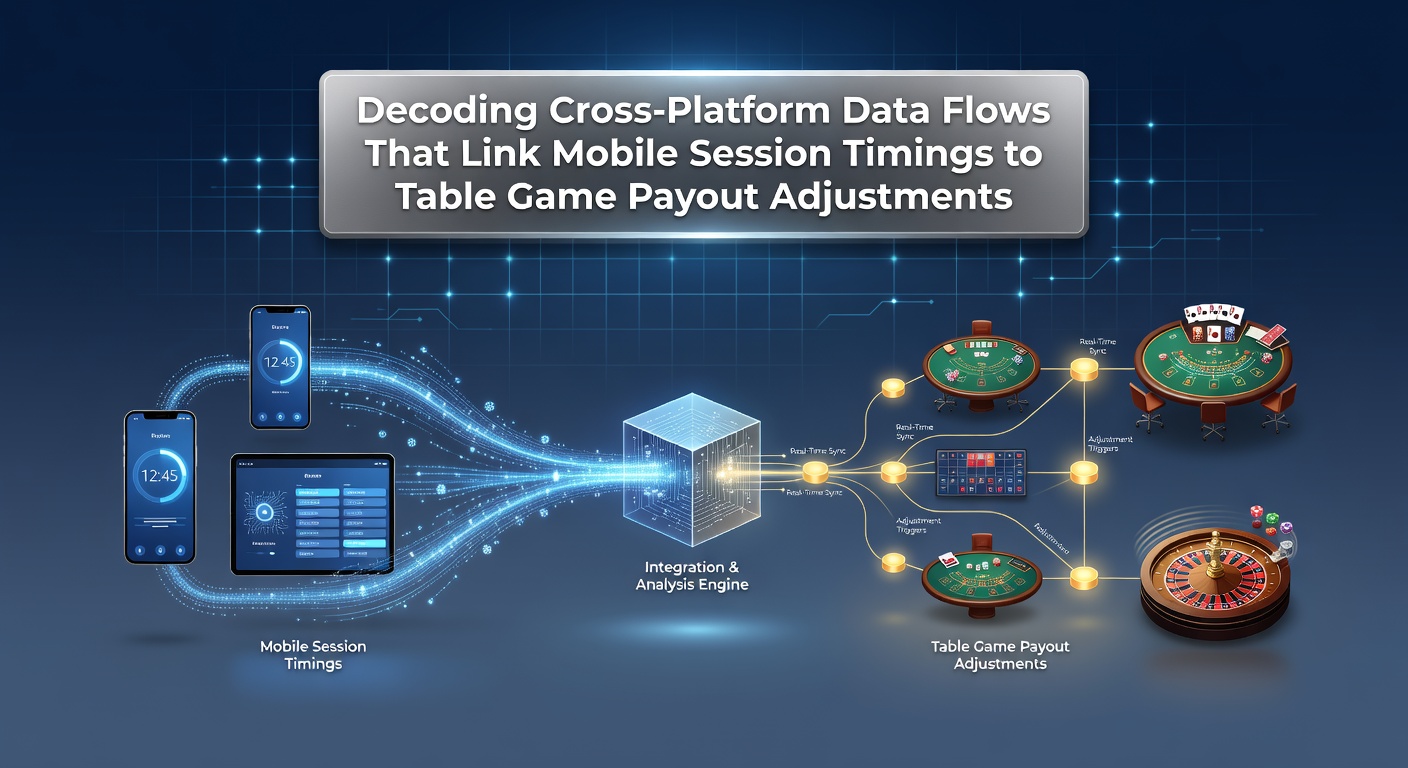
Online gaming platforms collect vast amounts of player interaction data across devices, and mobile session timings form a key component that operators route into centralized systems for analysis. These timings include login durations, interval patterns between bets, and session lengths on smartphones or tablets, which then integrate with backend algorithms managing table game payouts. Data flows move through secure APIs that connect mobile front-ends to servers handling games such as blackjack, roulette, and baccarat, allowing adjustments based on aggregated behavioral signals.
Mobile Session Timings as Input Signals
Session timing metrics capture precise intervals during which users remain active on mobile interfaces, and operators log these details at millisecond resolution before transmitting them to data warehouses. Researchers at institutions like the University of Nevada, Las Vegas have documented how prolonged evening sessions on mobile devices correlate with specific engagement curves that differ from desktop patterns. Platforms process this information through real-time pipelines that aggregate individual records into cohort-level insights, enabling identification of trends such as peak activity windows or drop-off points during table game rounds.
Cross-device synchronization ensures that a player's mobile session data merges with records from other platforms without duplication, and timestamp matching protocols align events across operating systems like iOS and Android. This integration supports payout models that respond to timing variables, for instance by modulating return-to-player percentages in table games when session data indicates shifts in average bet frequency or duration.
Table Game Payout Adjustment Frameworks
Table game payout systems rely on configurable parameters that operators update through automated scripts triggered by incoming data streams, and mobile session timings contribute variables such as average dwell time per hand or sequence length in multi-round play. These adjustments occur within regulatory boundaries set by bodies including the Nevada Gaming Control Board, where changes to payout structures require documentation and compliance verification. Algorithms evaluate timing clusters to determine whether payout rates need recalibration for particular game variants, maintaining overall house edge targets while responding to observed play distributions.
Cross-Platform Data Integration Pathways
Data pathways span multiple layers, beginning with mobile application event listeners that capture timing details and ending with centralized decision engines that apply adjustments to table game servers. Middleware layers handle protocol translation between mobile SDKs and core gaming databases, while encryption standards protect the flow of sensitive session information during transit. Observers note that platforms operating in May 2026 reported expanded use of edge computing nodes to reduce latency in these flows, allowing faster correlation between mobile timings and payout outputs across global user bases.

Industry reports from the European Gaming and Betting Association highlight how operators employ standardized data schemas to ensure compatibility when routing session metrics from mobile sources into table game management modules. These schemas define fields for session start and end markers, alongside derived metrics such as average inter-bet intervals, which feed directly into payout calibration routines. When timing data from mobile sessions shows consistent clustering around certain thresholds, systems trigger review processes that can lead to targeted payout modifications for specific table game titles.
Regulatory and Technical Considerations
Regulatory frameworks in jurisdictions such as New Jersey and Australia mandate audit trails for any payout adjustments tied to player data flows, and operators maintain logs that link mobile session timings to resulting changes in table game parameters. Technical implementations often incorporate machine learning models trained on historical timing datasets to predict adjustment needs, reducing manual oversight requirements. These models process anonymized aggregates rather than individual records, aligning with data protection standards enforced by regional authorities.
Platforms continue to refine these systems as mobile usage grows, and timing data from May 2026 deployments shows increased granularity in how session metrics influence multi-table environments. Integration testing across cloud providers ensures that data flows remain consistent even when users switch between devices mid-session, preserving the accuracy of payout linkage calculations.
Conclusion
Cross-platform data flows that connect mobile session timings to table game payout adjustments represent a mature area of gaming technology infrastructure, supported by established protocols and regulatory oversight. Continued evolution in these systems depends on advances in data processing efficiency and compliance mechanisms across major markets.